The Cold, Clear Truth: Why the Great Lakes Might Be America's Best-Kept Wreck Diving Secret
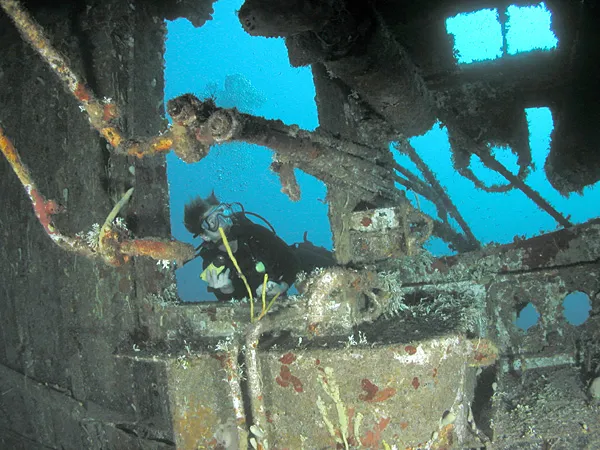
Photo: w:en:Aquaimages (talk | contribs), CC BY-SA 2.5, via Wikimedia Commons
Ask a room full of American divers to name the best wreck diving in the country and you'll hear the same answers: the Spiegel Grove off Key Largo, the Oriskany in Pensacola, maybe the Yukon in San Diego. All good boats. All artificial reefs, though — ships deliberately sunk for divers.
Now ask about the Great Lakes, and watch the room go quiet. That's the tell. Because the lakes hold an estimated 6,000 shipwrecks, many of them genuine disasters with genuine histories, and thanks to an unlikely ally — an invasive mussel the size of your thumbnail — they're preserved better than wrecks in warm saltwater anywhere in the world.
The Mussel That Saved the Wrecks
Here's the irony nobody saw coming. When zebra and quagga mussels arrived in the ballast water of transatlantic freighters in the late 1980s, they devastated the lakes' ecosystems. Nobody's arguing otherwise. But they also turned out to be voracious filter feeders, and over three decades they stripped the water of the algae and plankton that used to cloud it.
The result: visibility that regularly pushes 60, 80, even 100 feet on the right days. On Lake Huron's Thunder Bay, divers have reported conditions approaching something you'd expect in Cozumel — except instead of a reef, you're looking at the Daniel J. Morrell's shattered hull, or the wooden schooners of Thunder Bay's underwater sanctuary, some resting intact with their masts still standing.
And here's the kicker: freshwater, no shipworms, and cold bottom temperatures mean the wood doesn't rot the way it does in the tropics. Caribbean wrecks from the 1980s are collapsing into rubble. Lake wrecks from the 1860s still show original paint, rigging, and nameboards. The Rouse Simmons — the legendary Christmas Tree Ship that went down in 1912 — still sits with its cargo story intact. You will not find that level of preservation in salt water. Period.
Where to Start: Two Lakes, Two Personalities
Lake Michigan is the big-league option. The Straits of Mackinac area and sites off Milwaukee and Chicago offer everything from the schooner Gallinipper (one of the oldest wrecks in the lakes, dating to 1833) to modern freighters. Water's colder, sites are deeper, and the weather window is real.
Lake Huron, particularly the Thunder Bay National Marine Sanctuary near Alpena, Michigan, is the more approachable entry point. The sanctuary protects over 100 documented wrecks in relatively shallow water — plenty in the 15 to 50 foot range — with glass-bottom boat tours for the non-divers in your crew and a genuinely excellent visitor center in town. Alpena has leaned into the shipwreck identity hard, and it shows in how dive-friendly the infrastructure is.
Charter operators run both lakes from May through October, with September often delivering the magic combo: warm-ish surface temps and the year's best visibility.
The Drysuit Conversation You Can't Skip
Let's be straight about the cold. Even in August, deep wreck sites in Lake Michigan run in the 40s. Surface temps can hit the low 70s, but the thermocline doesn't care about your comfort.
That means the drysuit question comes up fast. If you're planning a single Great Lakes trip, many charters will rent you a suit — get the training or at minimum a thorough briefing, because a flooded drysuit at 80 feet in 45-degree water is not a learning experience you want on the job. If you're serious about temperate diving, get drysuit certified through your local shop over a weekend and buy your own undergarments, which matter as much as the suit itself.
Honest math: between the certification, suit rental or purchase, and travel, your first Great Lakes trip costs roughly what a Florida Keys long weekend does. It's not cheaper diving. It's different diving.
Why It Belongs on Your Bucket List
There's a moment on a Great Lakes wreck that changes people. You drop through cold, green water, and at first you see nothing. Then the outline resolves — a hull, a windlass, a ship's wheel still mounted where a sailor left it 140 years ago — and you realize you're looking at a moment frozen in time, not a dive attraction that was installed last decade.
These weren't sunk for you. Sailors died on some of them. Communities lost their livelihoods. Diving them with that respect — take nothing, touch lightly, leave the artifacts for the next diver — is part of the experience.
So here's the pitch: next time you're planning a dive trip, look at a map of Michigan instead of a map of the Caribbean. Pack your thermal protection, book with a local charter, and go meet a piece of American maritime history that the mussels, bizarrely, helped save.
The dolphins can wait. The wrecks have been waiting 150 years.