72 Degrees Forever: Why Florida's Springs Are the Easiest Dive Trip You'll Ever Plan
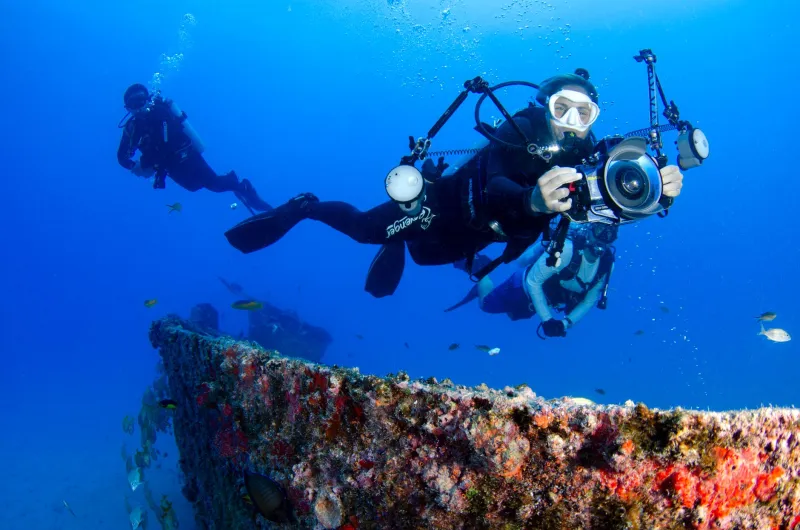
Let's be honest: most first dive trips involve a spreadsheet of anxieties. Will the boat be rough? Did I pack my certification card? Is my regulator going to behave at depth? Florida's spring country quietly deletes almost all of that. No boats. No swell. No salt sting in your mask. Just water so clear it feels fake, bubbling up from the Floridan Aquifer at a stubborn 72 degrees, every single day of the year.
If you're a newer diver, a rusty diver, or someone landlocked in Atlanta or Nashville looking for the closest thing to a tropical blue hole without a flight, this is your trip.
Why Springs Punch Above Their Depth
The selling point isn't depth—most spring dives top out between 30 and 100 feet. It's everything else. Visibility in the springs regularly runs 100 feet or more, which means your first open-water dives happen in conditions that make you feel like you're floating through air. Compare that to your local quarry at eight feet of viz and you'll understand why divers drive hours for this.
And that 72-degree water? It's a feature, not a bug. In July, when Florida's coast is soup-warm and crowded, the springs feel shockingly refreshing. In January, they're warmer than the air, with mist rising off the surface at dawn. Bring a decent 5mm wetsuit (or a 7mm if you chill easily) and you can dive comfortably 365 days a year.
The Big Three, and What Each One Actually Is
Ginnie Springs near High Springs is the social butterfly of the group. Think campground meets dive resort—tubes floating overhead, a bath-warm shallows where swimmers hang out, and the Ballroom cave system for anyone with appropriate training. If your non-diving partner or family is coming along, Ginnie is the easiest sell. Dives are shallow and relaxed, and the Devil's Ear spring vent, where water pulses out of the limestone, is genuinely mesmerizing.
Blue Grotto in Williston is the polished one. A sinkhole that drops to about 100 feet, it's got a paid-entry operation with a dive bell at 30 feet (yes, you can talk to your buddy mid-dive), a training platform, and lighting in the cavern zone. It's the closest a new diver can get to a cavern experience with a very forgiving learning curve.
Devil's Den is the moodiest and most photogenic. Diving happens inside a dry cave with a hole in the ceiling—sunbeams pour through the opening and light up the water below. It's smaller, quieter, and books up fast, so reserve your slot in advance. The beam-of-light photos you've seen on Instagram? That's here.
Stringing Them Together: The Long Weekend Route
Here's the beauty of spring hopping: everything sits within about 90 minutes of Gainesville. A classic three-day loop:
- Friday: Fly or drive in, hit Ginnie for an easy afternoon shallow dive to shake off the travel rust.
- Saturday: Blue Grotto in the morning for your deep dive of the trip, then Devil's Den in the afternoon for the sunbeam shots.
- Sunday: One more relaxed Ginnie dive or a float down the Santa Fe River before the drive home.
Total tank fills needed: maybe six. Total logistics: roughly the same as a camping trip. Total cost: a fraction of a Caribbean liveaboard.
Gear Tweaks Worth Knowing
Freshwater is slightly less buoyant than saltwater, so expect to add a pound or two of weight. Cold-ish water means exposure protection even in summer—a 5mm full suit plus a hood for the deeper sites like Blue Grotto will keep you comfortable. Bring a good dive light even for daytime; the cavern zones and the Ballroom reward a little illumination. And pack a dry bag and warm layers for surface intervals, because spring mornings can be surprisingly brisk.
One more note: if the springs spark something in you, this region is the birthplace of American cave diving. Sites like these are where you'll meet divers working toward cavern and cave certifications—and where you'll realize just how deep the rabbit hole (literally) goes.
Before You Go
Check each site's rules—Ginnie is open-water friendly, while Blue Grotto and Devil's Den have specific policies on cavern access and certification levels. Reserve Devil's Den ahead of time. Fill tanks in Gainesville or on-site. And bring cash for entry fees, which run modest by dive-travel standards.
The ocean will always be there, and we love it dearly. But there's something almost meditative about sinking into water that's been filtering through limestone for decades, in near-perfect silence, with a sunbeam cutting through the dark above you. Sometimes the wildest place to explore is 100 feet down in a hole in the ground, two hours from a decent taco.