No Passport, No Problem: The Under-Appreciated Case for Diving America's Own Coastlines
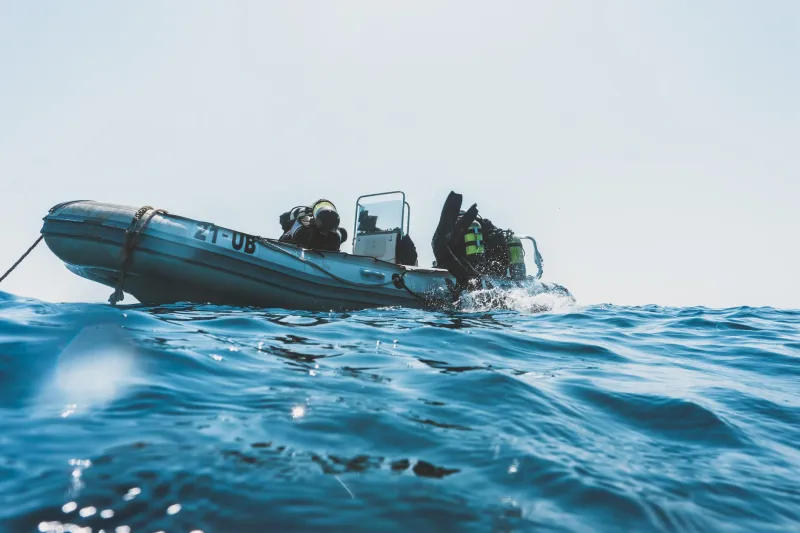
Somewhere along the way, American divers absorbed a strange idea: that a "real" dive trip means a passport, a connecting flight, and a resort with a dive dock. Meanwhile, some of the most interesting diving on the planet sits within driving distance of roughly half the US population.
We're not against Cozumel. We're really not. But we've watched too many divers burn their entire dive budget on airfare while skipping genuinely world-class sites in their own states. Let's make the case for the home team.
The Math Nobody Wants to Do
Run the numbers on a typical long-weekend trip to the Caribbean from most US cities: flights, baggage fees for your gear, a hotel, meals, and dive packages. You're realistically north of $1,500 per person before you've seen a single parrotfish.
Now compare that to a weekend in the Florida Keys. A tank rental and two-tank trip out of Key Largo runs a fraction of that. Add a modest motel and gas money, and you've still got hundreds left over — which buys more bottom time, a specialty course, or a second trip later in the year.
More dive days per dollar isn't a compromise. It's a strategy. The diver who dives locally four times a year gets better, faster, than the one who saves up for one expensive international trip and spends the first two days shaking off rust.
Florida: The Caribbean That's Technically Domestic
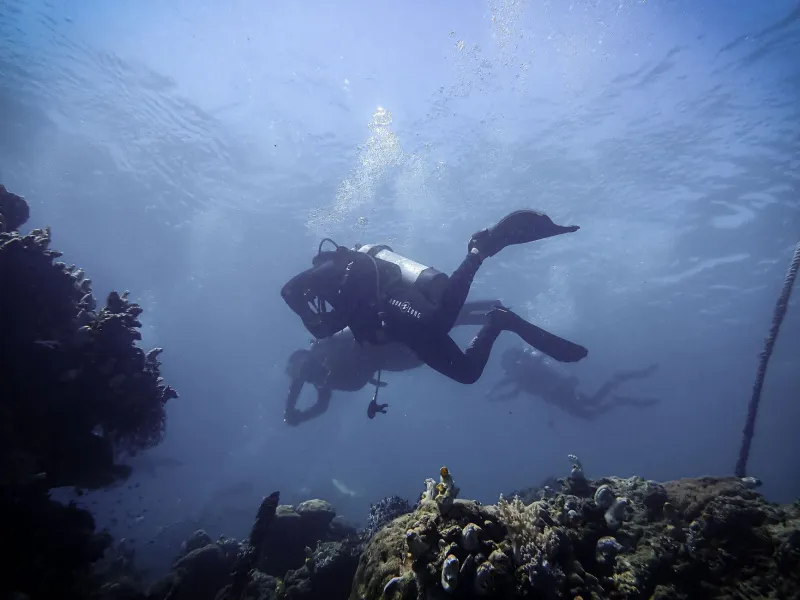
The Keys don't get enough credit for how good they actually are. Molasses Reef, the Spiegel Grove, the USNS Vandenberg off Key West — these are sites that would be internationally famous if they were located anywhere else. Sea turtles, reef sharks, massive goliath groupers, and the only living coral barrier reef in the continental US.
And that's before you even mention the springs. Florida's freshwater caverns and caves — Ginnie Springs, Blue Grotto, Devils Den — offer 72-degree water and visibility measured in the hundreds of feet, twelve months a year. Divers fly in from Europe for this. If you live in Georgia, it's a road trip.
California: Cold Water, Big Rewards
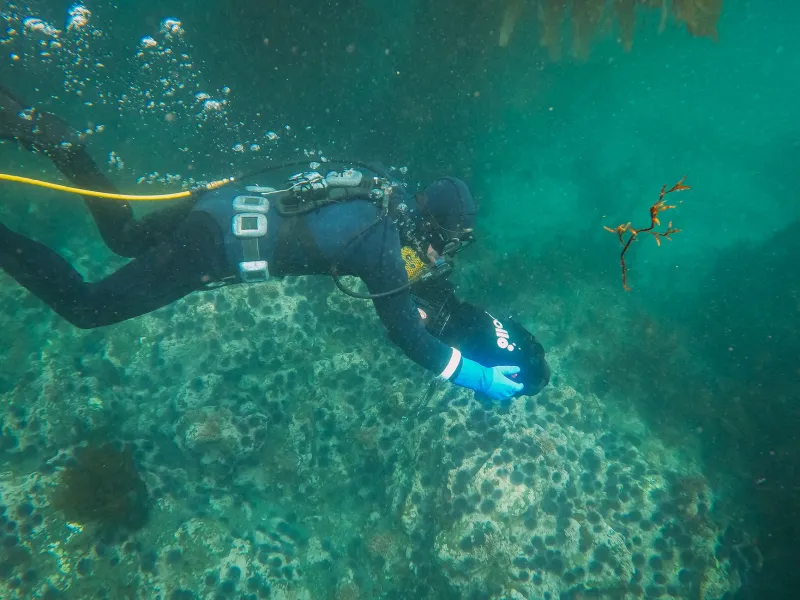
Yes, you'll wear a 7mm wetsuit or a drysuit. In exchange, you get something the tropics simply can't offer: kelp forests. Diving through a cathedral of giant kelp at Catalina or Anacapa, sunlight filtering down in shafts, sheephead and garibaldi darting between the fronds — it's an experience that changes how you think about what diving can be.
The Channel Islands are, frankly, one of the most underrated dive destinations in North America. Add in seal encounters at the Coronado Islands and the sheer density of life in the La Jolla kelp beds, and cold water starts looking like a feature, not a bug.
The Pacific Northwest: For the Divers Who Want to Feel Something
Puget Sound and the surrounding waters are the final boss of "it's not what you'd expect." Cold, green, and absolutely teeming with life. Giant Pacific octopus — the largest species on Earth — wolf eels, plumose anemones that turn a wreck into a flower garden, and nudibranchs in colors that look invented.
Visibility can be moody, sure. But on a good day at sites like Edmonds Underwater Park or Sund Rock, you'll understand why Pacific Northwest divers are among the most devoted in the country. Nobody dives 48-degree water casually. They dive it because it's extraordinary.
The Honest Trade-Offs
Let's not pretend it's all upside. Domestic diving means variable conditions, colder water in most places, and no beach bartender waiting when you surface. Visibility in the Keys won't match Cozumel on its best day. That's real.
But here's the thing: the diving skill you build in challenging conditions — surf entries, low viz, cold-water management — makes you a dramatically better diver everywhere. The local diver who logs twenty comfortable-but-messy dives off a California beach arrives in the tropics more capable than the resort diver with the same number of easy drift dives.
Start Where You Are
The best dive trip isn't the one with the most impressive Instagram backdrop. It's the one you actually take — the one that fits your budget, your calendar, and your life. America's coastlines offer reefs, wrecks, kelp, springs, and creatures you'd fly across an ocean to see elsewhere.
Get your gear serviced, find your local dive community, and book the weekend trip you keep postponing for the someday-big-one. The passport will still be there. The octopus in Puget Sound is waiting now.