Your Regulator Is Fine. Your Dive Buddy Might Be the Real Problem.
Walk into any dive shop from Key Largo to Monterey and you'll hear the same conversation. Someone's debating whether to upgrade to the newest air-integrated computer. Someone else is comparing titanium vs. stainless steel backplates like they're choosing a wedding band. We are, as a diving culture, absolutely obsessive about gear.
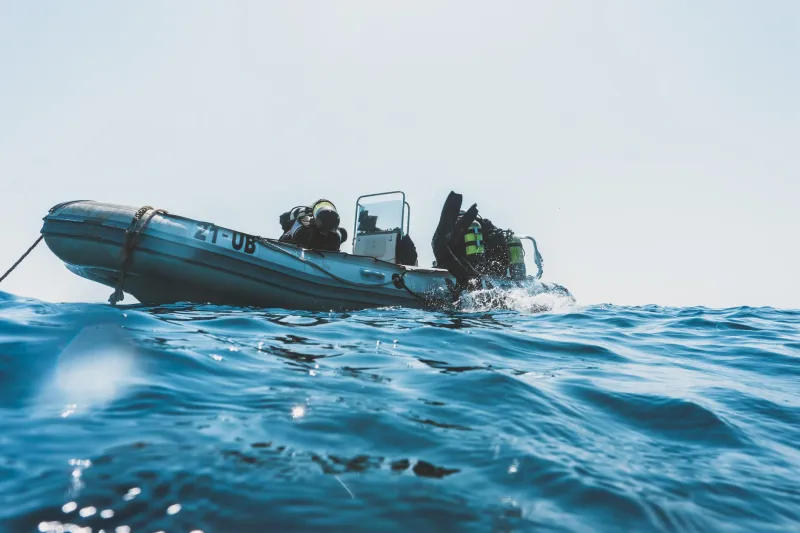
And then we roll up to the boat, get paired with a total stranger, and never ask them a single question beyond "you got a light?"
That's backwards. And it's time we talked about it.
The $10,000 Buddy Problem
Here's an uncomfortable truth: your regulator — the piece of equipment keeping you alive — is one of the most reliable, well-tested pieces of life support equipment ever made. Modern regulators fail rarely, and when they do, they usually fail safe, meaning they free-flow rather than cut off your air.
Your dive buddy? No such quality control. No CE certification. No annual service.
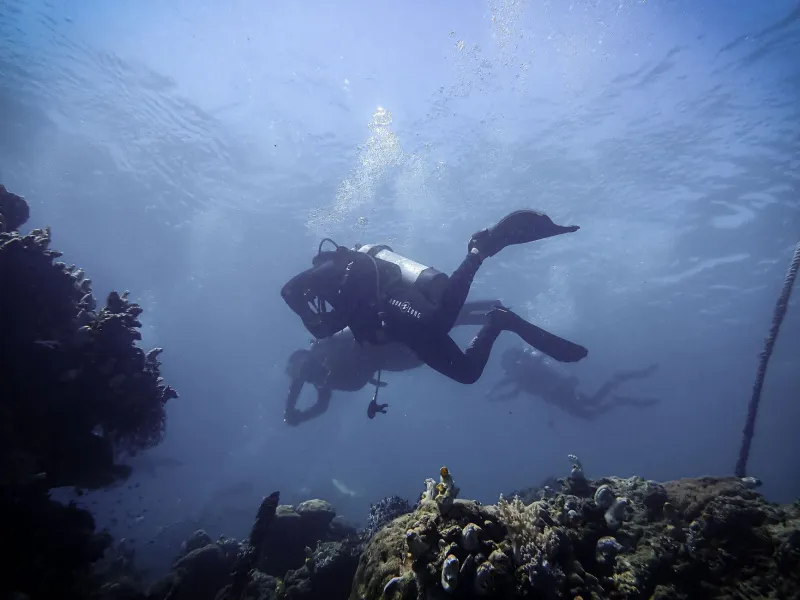
A mismatched buddy is the single most common way a great dive goes sideways. Not equipment failure. Not marine life. Not current. It's the person next to you who blows through 2,000 PSI in twenty minutes while you're still at 2,800, or who never once looks back, or who surfaces early because they got cold and didn't want to "make it weird."
You can buy your way out of bad gear. You can't buy your way out of a bad buddy — unless you do the one thing most divers skip: talk about it first.
The Pre-Dive Conversation Nobody Has
Most buddy pairs on American charter boats exchange maybe thirty words before the dive. Thirty words is not enough to know whether this person is going to stay with you, match your air consumption, or notice if you signal "low on air."
Here's the checklist we run through at Delfin Diving before every guided pairing. Steal it shamelessly.
1. Air consumption, honestly. "Roughly how much do you usually surface with?" If someone says they've never run low, that's not reassuring — that's a red flag they don't track it.
2. Bottom time goals. Some divers want forty-five minutes at 60 feet. Some want to burn their computer's no-deco limit at 100. Neither is wrong, but doing both in the same buddy pair is.
3. What happens if we get separated. The answer should be the same for both of you: search for one minute, then surface safely. If your buddy says "I'll find you," that's not a plan. That's a movie line.
4. Signals beyond the basics. Okay, turn around, how much air. But also: what does your team use for "something's wrong but not an emergency"? Five seconds of clarification beats five minutes of confusion at depth.
5. Photography or not? The single biggest source of buddy friction in modern diving. One person wants to shoot a nudibranch for six minutes; the other wants to cover the reef. Set the expectation before descent, not during an argument at 40 feet.
6. Last dive logged. Not to gatekeep — but if someone hasn't been in the water in three years and you're diving a site with current, that changes how closely you stick together. Better to know now.
Why a Bad Buddy Ruins a Great Site
We've guided dives at genuinely world-class spots — kelp forests off Catalina, the springs of north Florida, wrecks off the Carolinas — where the site was spectacular and the dive was miserable. Why? Because the buddy pair spent seventy minutes negotiating, chasing, and waiting.
A great dive site with a great buddy is unforgettable. A great site with a bad buddy is a frustrating swim. But here's the flip side that surprises people: a mediocre site with a great buddy is often a fantastic dive. You notice more. You relax. You surface laughing.
The buddy is the experience. The site is just the backdrop.
Vetting a Stranger (Without Being Weird About It)
If you're traveling solo and the boat assigns you a buddy, you don't need to interview them like a job candidate. But you can do a two-minute version:
- "What kind of diving do you usually do?" (Their answer tells you their comfort zone.)
- "Anything you want out of this dive?" (Photography? Depth? Just floating?)
- "You good with the one-minute-then-up rule if we split?"
That's it. Ninety seconds. And if their answers make you uneasy, it is completely acceptable — on any reputable US charter — to ask the divemaster to re-pair you. Nobody worth diving with will be offended. And if they are offended? That told you something too.
The Bottom Line
Buy the good regulator. Service it annually. Get the dive computer. But understand that the variable with the widest range of outcomes on any dive isn't your equipment — it's the human next to you.
Gear keeps you breathing. A good buddy keeps you diving.
So next trip, before you check your BCD and your weights and your octo, check in with your person. Ask the questions. Set the expectations. It costs nothing, takes two minutes, and it's the closest thing diving has to a guaranteed upgrade.