Lights On, Ocean Off: The Surreal Magic of Your First Night Dive
You've done the daylight dives. You know the reef by heart — the coral heads, the sandy chute, the little cleaning station where the wrasses clock in every morning. Then someone suggests going back after dark, and honestly, your first reaction is probably a hard no.
Fair. But hear us out: the ocean you think you know is basically a daytime reroute. When the lights go out, an entirely different crew clocks in for the night shift — and you've never met most of them.
The Ocean's Second Shift
Daytime reefs are all about grazers and cruisers: turtles, schooling fish, the occasional passing ray. Night is when the hunters come out. Octopuses that spent the day stuffed into a crevice emerge to patrol the sand, and watching one change color and texture as it moves is one of the most hypnotic things you'll ever see underwater.
Moray eels, which look lazy at noon, become genuinely active after sunset. Crabs and shrimp that hid all day are suddenly everywhere, going about their business like you're not shining a flashlight at them. And if you're lucky, you might catch a hunting tarpon using your dive light as its own personal spotlight — they'll snatch fish right out of your beam.
Then there are the parrotfish, and this is the detail that gets everyone: they make their own pajamas. Before settling in, they secrete a mucus cocoon around themselves, thought to mask their scent from nighttime predators. Finding a fish inside what looks like a tiny sleeping bag never stops being delightful.
The Sparkle Factor
If you've heard anything about night diving, you've probably heard about bioluminescence. On the right night, in the right water, you can cover your light, wave your hands, and watch the water ignite with blue-green sparks. It's plankton reacting to movement — it's also the closest thing to magic you'll experience at 30 feet.
Some spots also host tiny planktonic creatures that glow under light, sometimes called "coral blinking." Look closely at your beam's edges and you might spot the reef twinkling in ways it never does at noon.
Yes, It's a Little Scary. That's Normal.
Let's not sugarcoat it: the psychological leap is real. Your brain is wired to be nervous about dark water, and the first few minutes of a night dive — that moment when you sink below the surface and the daylight disappears — can spike anyone's heart rate.
A few things that genuinely help:
- Dive a site you already know. Familiarity is your best anxiety management tool. Your first night dive should be a place you've done in daylight.
- Get in the water before full dark. A dusk or "twilight" dive splits the difference — you descend in fading light and watch the reef transition around you.
- Bring a backup light. It's standard practice, and just knowing it's clipped to your BCD quiets the what-ifs.
- Pick a calm, shallow site. Your first night dive doesn't need to be deep or demanding. Twenty to forty feet of mellow, protected water is plenty.
Within ten minutes, most divers report the same thing: the fear fades and curiosity takes over. Your light cone becomes your entire world, and honestly, that focus feels a lot like meditation.
Where to Take Your First Night Dive in the US
The good news is you don't need a passport or a liveaboard. America has outstanding, beginner-friendly night diving:
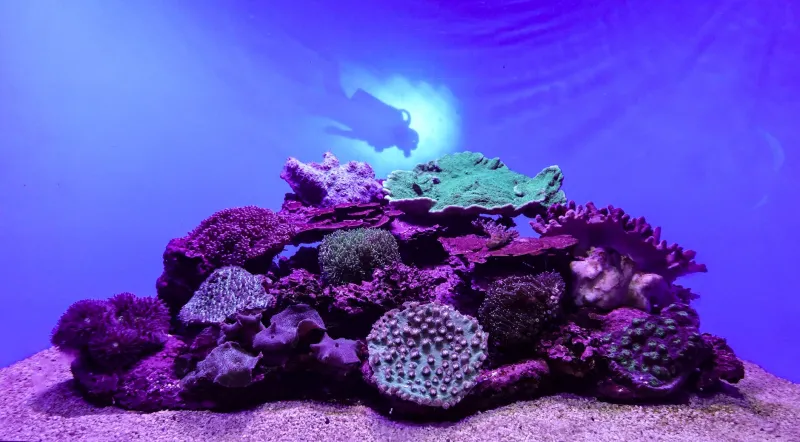
Florida Keys, Florida. The classic choice. Shallow, warm, easy-entry sites like the reefs off Key Largo run guided night dives several nights a week. The UV night dives — where corals fluoresce under special lights — are worth the trip alone.
Catalina Island, California. California's kelp forests take on a completely different personality after dark, and the water at Casino Point is well-protected and manageable. Bring a thicker wetsuit; the Pacific doesn't do warm.
Oahu, Hawaii. Guided night dives off Oahu regularly feature sleeping turtles, hunting eels, and — in season — the famous manta-adjacent plankton action. Operators here run first-timer nights constantly.
Bonne Terre Mine, Missouri. Yes, Missouri. This flooded former lead mine offers pitch-dark dives in 58-degree water with billion-candlepower lighting rigs. It's a controlled, no-surface-conditions environment, which makes it a surprisingly great confidence builder.
Your Next Certification Frontier
Here's the thing about night diving: it's the single best next step for a newly certified diver. It's accessible, it's guided in most cases, and it resets your sense of wonder in a way that a tenth daylight dive on the same reef simply can't. Many divers find the PADI Night Diver specialty or an Adventure Dive on their next trip is the perfect low-pressure way in.
The ocean runs a 24-hour operation. Most people only ever see half of it. Once you've watched an octopus hunt by your flashlight beam or swum through a cloud of living light, the daytime reef will never look quite complete again.
Dive deeper. Explore further. Just bring a good light.