Fly All Night, Dive in a Forest: What the Channel Islands Actually Deliver
Let's get the cold water question out of the way first, because we know it's the one stalling your booking. Yes, the Channel Islands are chilly. Water temps run roughly in the mid-50s to mid-60s depending on season, and yes, you'll want a proper 7mm wetsuit or a drysuit if you own one. But here's the thing nobody tells you: cold water is the price of admission to some of the healthiest, most alive underwater ecosystems in North America. And it's a price that pays for itself about four minutes into your first descent.
What You're Actually Flying Toward
The Channel Islands sit off the coast of Southern California — Santa Cruz, Anacapa, Santa Barbara, San Miguel, and a few others — protected as a National Park above the surface and a National Marine Sanctuary below it. That protected status matters. It means no take, no trawling, no nonsense. The result is an underwater landscape that looks like what the rest of the ocean is trying to be.
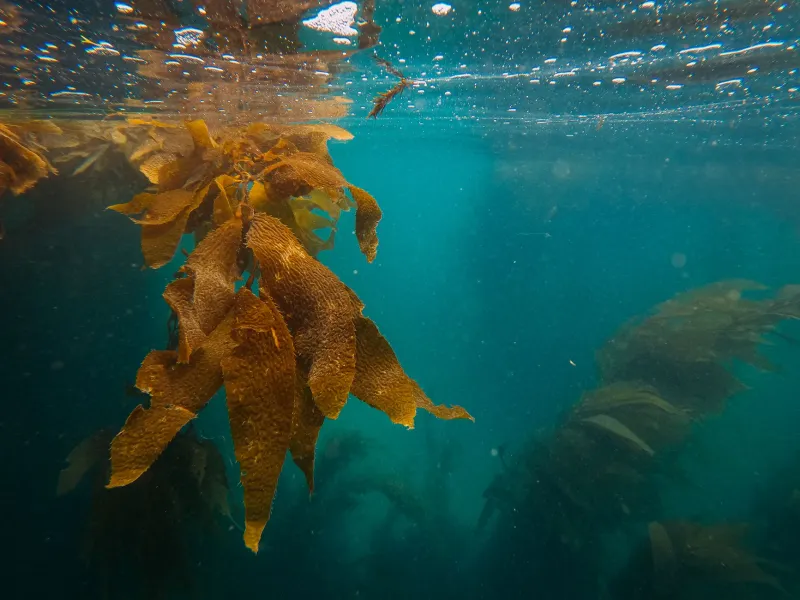
Kelp is the headline, and it deserves it. Giant macrocystis can grow more than a foot a day in peak season, anchoring itself to the seafloor and stretching toward the surface like a living scaffold. Diving through it isn't like swimming over a reef. It's like walking through a cathedral where the pillars are alive, the light comes down in shafts, and something with whiskers is almost certainly following you.
The Sea Lions Will Find You
If you've only dove warm water, you haven't been played with yet. California sea lions are the islands' unofficial dive masters, and they have zero respect for your dive plan. They'll nibble your fins, blow bubbles in your face, and spin around you in corkscrews that would make a fighter pilot dizzy. Some dives, you'll spend more time watching them than looking at anything else — and that's fine. That's the trip.
Beyond the mammals, the rocky reefs hold garibaldi (California's shockingly orange state marine fish), sheephead, señoritas, moray eels, and nudibranchs that look painted on. Bring a wide-angle lens if you have one, but honestly, you'll be too busy to use it.
What the Trip Actually Looks Like
Most divers base themselves in Ventura or Oxnard, both an easy drive from LAX. From there, you've got two main options:
- Day trips: Several operators run single and multi-day trips out of Ventura Harbor on larger dive boats. Many offer bunk-style berths, hot meals, and a heated deck — the multi-day 'liveaboard lite' experience without the airfare to somewhere remote.
- Park and dive: For a more DIY flavor, you can camp on the islands via Island Packers ferry and do shore dives on Santa Cruz Island. It's more work, but the solitude is real.
The classic move is a weekend of it: fly in Friday, overnight on the boat Saturday, dive Anacapa and Santa Cruz Sunday, fly home Monday. You'll be back at your desk Tuesday talking about it until your coworkers stop making eye contact.
For the Warm-Water Diver: An Honest Briefing
If your logged dives are all Cozumel and the Keys, a few adjustments will make this trip go smoothly:
- Weighting: You'll need significantly more lead than you're used to. A 7mm suit plus hood and gloves adds buoyancy. Ask the crew; they weight people for this every weekend.
- Surge and visibility: Kelp forests trade the Caribbean's 100-foot viz for something moodier — often 20 to 60 feet. Surge around the rocky islands is real. Stay close to your buddy and use the kelp for cover when it kicks up.
- Navigation: It's easy to get turned around in the kelp. Surface with your head on a swivel, and listen hard during the boat briefing. The crew knows where the boat will be.
- Book ahead: Summer weekends sell out weeks in advance. If you want the flattest crossings, aim for late summer through fall, when the water is warmest and the wind usually cooperates.
So Is It Worth the Flight?
If you measure every dive against coral and 80-degree water, maybe not — and that's okay. But if you want a dive trip that feels genuinely different from anything on this side of the country, the Channel Islands are the answer. It's a temperate rainforest you can float through, populated by animals that treat you like a curious new toy. There's nothing in the Caribbean like it, and there's nowhere else in the lower 48 like it either.
Book the boat. Pack the extra lead. Let the sea lions do the rest.