The Sinking Feeling That's Good for Everyone: How America Builds Reefs on Purpose
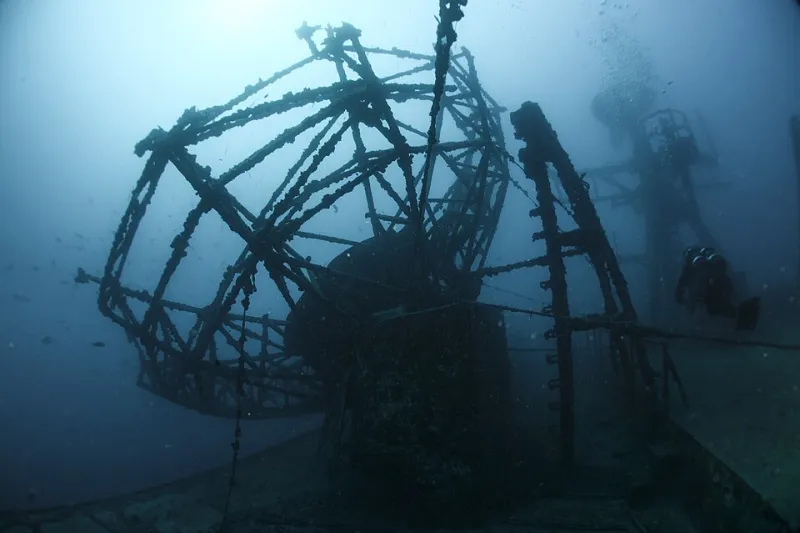
Photo: U.S. Navy photo by Mass Communication Specialist 2nd Class Nicholas S. Tenorio, Public domain, via Wikimedia Commons
Somewhere off the coast of Florida right now, a decommissioned Navy vessel is being fitted with charges, towed to a sandy patch of seafloor, and sent to the bottom on purpose. Nobody's sad about it. In fact, a small crowd of boaters is probably watching from a safe distance, because in coastal America, sinking a ship is cause for celebration.
Artificial reef programs have quietly become one of the biggest stories in American diving — a strange collaboration between government agencies, fishing lobbies, dive clubs, and scrap-metal economics that has manufactured hundreds of dive sites where there used to be nothing but sand.
Who Pays to Sink a Perfectly Good Ship?
The short answer: a patchwork. State natural resources departments run most artificial reef programs, often with federal grants funneled through programs like the Wallop-Breaux trust, which redirects boater fuel tax and fishing equipment excise money into aquatic projects. Add in local governments, dive clubs running fundraisers, and the occasional shipping company eager to offload a rusting hull responsibly, and you get the funding stack.
The economics are stranger than you'd think. Sinking a large vessel properly — cleaned of fuels, oils, and anything that could leach into the water, then structurally prepared for diver penetration — can cost hundreds of thousands of dollars. But that's often cheaper than domestic scrapping, which is why ports and even foreign navies have essentially donated ships to American reef programs. The alternative for a lot of this tonnage was a foreign beach to be broken apart by hand. The seafloor is arguably the better fate.
Five Years on the Bottom: What Actually Grows
The transformation follows a predictable script. Within weeks, the bare steel wears a fuzzy coat of algae and bacterial film. Plankton-eating fish show up almost immediately — baitfish first, then the predators who eat them. By year one, a wreck has a working food chain.
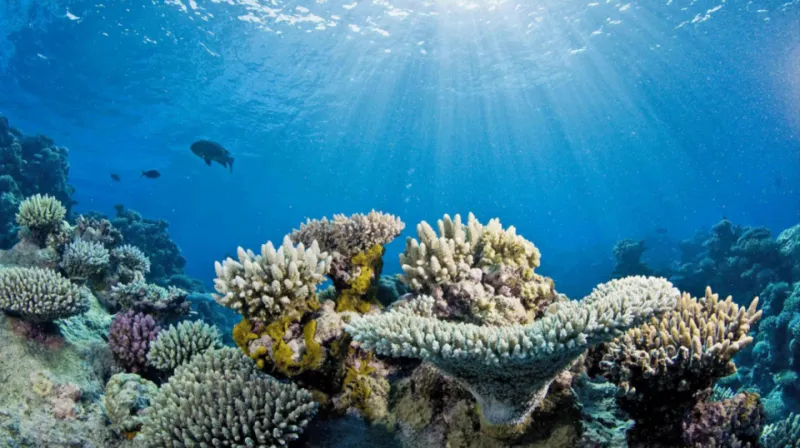
The real architecture arrives over years two through five. Hard corals, sponges, bryozoans, and hydroids slowly encrust the structure — faster in warm southern water, glacially in the Pacific. That growth is what turns a ship into a reef: it creates the nooks, overhangs, and food sources that draw grouper, snapper, lobsters, and the photogenic megafauna divers actually travel for. Florida's USS Oriskany, sunk off Pensacola in 2006, went from empty carrier to one of the most dived sites in the country within a decade.
And it's not just ships. States have sunk subway cars (New Jersey's old Redbird cars became surprisingly productive reef material before the program ended), surplus tanks, concrete bridge chunks, and purpose-built concrete pyramids designed to stand up to storm surge where a hull would collapse.
The Argument at the Dock
Not everyone's cheering. Marine scientists have raised legitimate concerns for decades, and the debate hasn't fully settled.
The critics' case: artificial reefs can concentrate fish in ways that make them easier to overfish, effectively becoming fish aggregating devices that help anglers, not fish populations. Poorly cleaned vessels can leak contaminants. And some argue reefs just redistribute existing fish rather than increasing total biomass.
The defenders' response: well-placed, well-cleaned reefs in sand-dominated regions add hard substrate that simply didn't exist, creating habitat from zero. Florida's west coast, largely bottomless sand for miles, is the textbook example. Studies there have documented genuine production, not just aggregation — though results vary by site, and the honest answer is that reef design matters enormously.
For divers, the practical takeaway is to support programs that do it right: thorough cleaning, depth and placement planning, long-term monitoring. The wrecks worth diving are the ones built with the ocean in mind.
Go See One
The beauty of America's artificial reef boom is accessibility. You don't need a liveaboard or a passport. Pensacola, Miami, the Carolina wrecks, the subway-car reefs off the Northeast — these are weekend trips. And there's something genuinely moving about hovering over a warship that's now a living neighborhood, watching a moray eel peer out of a doorway where sailors once walked.
We sank it. The ocean did the rest. That's a pretty good deal.