Why Your Buddy Still Has 1,500 PSI and You're on Reserve
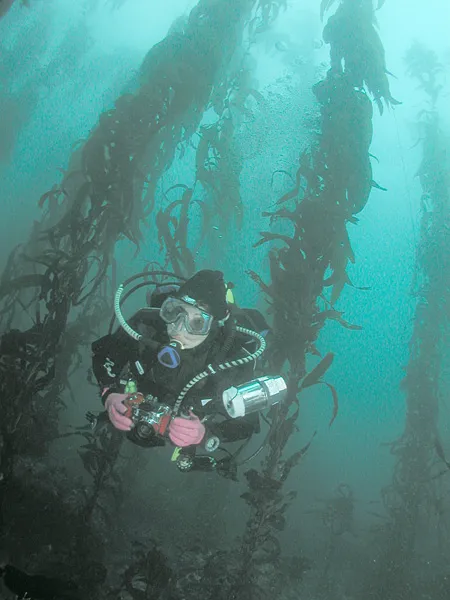
Photo: The original uploader was Aquaimages at English Wikipedia., CC BY-SA 2.5, via Wikimedia Commons
There's a special kind of disappointment that hits around minute 25 of a dive in Key Largo when your gauge reads 800 PSI, your buddy's reads 2,000, and the divemaster signals that you're both heading up because of you. Again.
If you just got certified and every dive ends while everyone else is still down there having fun, take heart: air consumption is one of the most trainable skills in diving, and almost nobody works on it deliberately. Here's what's going on, and what to do about it.
First, Understand What You're Actually Fighting
Your air use comes down to three things: how fast you breathe, how deep you are, and how much unnecessary effort you're expending.
Depth is non-negotiable physics. At 33 feet, you're pulling gas from your tank at roughly twice the rate you would at the surface, because each breath gets compressed to half its size in your lungs. At 66 feet, it's three times. So yes, a deep dive will always eat air faster — that part isn't a personal failing.
The personal part is everything else. New divers typically breathe fast and shallow because they're anxious, over-weighted, or swimming like they're being chased. Every one of those is fixable.
The Anxiety Tax
The single biggest air-waster for newer divers isn't bad technique — it's low-grade nervousness. Your brain hammers your respiratory rate up before you even notice it. If you surface with a headache and a half-empty tank, odds are good you were breathing quickly the entire time without realizing it.
The fix starts before you hit the water. Get settled on the boat, run through the dive plan, and take five slow, deliberate breaths at the surface before descending. Then, once you're down, check your breathing rate every few minutes. A good rhythm is roughly a four-second inhale and a six-second exhale. You don't need to count forever — just long enough to recalibrate what 'normal' feels like.
Fix Your Trim, Save Your Tank
Here's a drill you can do on any shallow dive, including one off a Gulf Coast charter: stop kicking, get horizontal, and just hang there. If you start sinking feet-first or drifting into a head-up posture, your weight distribution is off.
A diver swimming at a 45-degree angle is pushing water in every direction except forward. That's wasted effort, and wasted effort means wasted air. Get flat, move your weights around until you're balanced, and suddenly the same swim takes half the energy.
Practical checklist:
- Ankle weights or trim pockets can shift weight toward your hips if your legs sink
- Ditch the ankle weights if you don't need them — many divers carry pounds they don't need
- Slow your kick cadence. Frog kicks, longer glides, fewer strokes. Race-walking underwater looks as silly as it sounds, and it burns air
The Breathing Myths Worth Busting
Somewhere along the way, you may have heard that you should 'skip breathe' — hold your breath between inhales to stretch your gas. Don't. Holding your breath while diving is exactly what your open water instructor told you never to do, and for good reason: it creates pressure-related risks and doesn't actually help much.
What works instead is simply breathing slower and deeper. Deep, full breaths exchange more gas per breath, which means your body needs fewer of them. Think of it like highway driving versus stop-and-go traffic.
Drills That Actually Move the Needle
Want to add real time to your dives? Build these into your next few outings:
- The hover minute. Once per dive, find a sandy spot, settle into neutral buoyancy, and hover motionless for a full 60 seconds. It trains buoyancy control and calms your breathing in one shot.
- The slow swim. Pick a stretch of reef and cover it at half your normal speed. You'll see more marine life, and your air gauge will thank you.
- Gauge checks on a schedule. Every five minutes, glance at your pressure gauge. Awareness alone tends to slow people down — it's the same reason checking your speedometer makes you ease off the gas.
- Dive shallower on purpose. Spend a day on a 30-40 foot site — think the shallows of the Florida Keys or a California kelp cove — and practice all of the above. Shallow water is forgiving, cheap on air, and perfect for skill-building.
A Realistic Timeline
Don't expect miracles overnight. Most divers see meaningful improvement after 25-50 dives, once the anxiety fades and good buoyancy becomes automatic. But small gains show up fast — many new divers add five minutes of bottom time within a handful of dives just by slowing their kick and breathing deliberately.
And here's the kicker: the divers you envy, the ones gliding along with half a tank while you're on reserve? They weren't born that way. They just kept diving, kept relaxing, and let the numbers take care of themselves. Your tank will last longer too — it just needs you to chill out and let it.