Swimming with Sonar: What Dolphins Can Teach You About Being a Better Diver
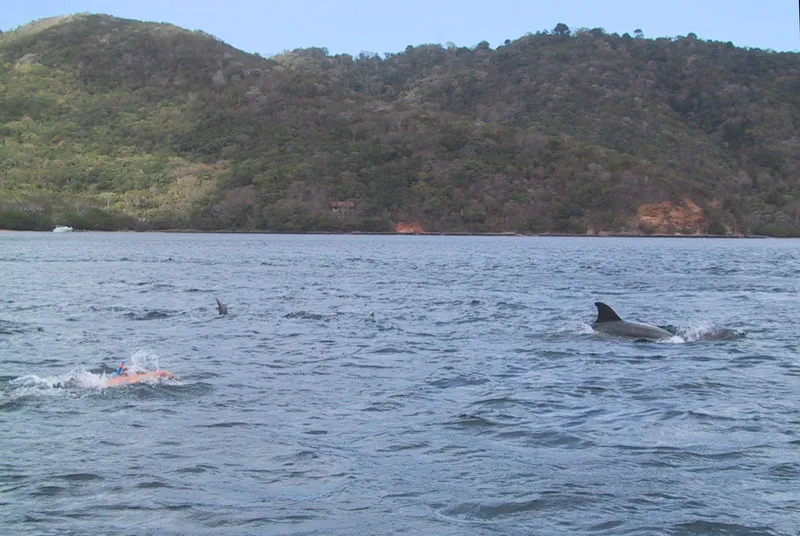
Photo: User: (WT-shared) KNBD at wts wikivoyage, Public domain, via Wikimedia Commons
There's a moment that every diver who's had a close encounter with wild dolphins describes the same way: the feeling that the animal isn't just near you — it's assessing you. Not with its eyes, exactly. With something older, stranger, and far more precise.
That sensation isn't your imagination running wild at depth. It's real. And understanding what's actually happening in those moments might just change how you move through the water forever.
The Ocean Has Its Own GPS — And Dolphins Built It
Dolphins navigate, hunt, and communicate using a biological sonar system called echolocation. They produce rapid clicks through a specialized structure in their foreheads called the melon, then receive the returning sound waves through their lower jaw, which transmits vibrations directly to the inner ear. The result is an acoustic picture of the environment so detailed that dolphins can detect a fish the size of a golf ball from over 100 feet away — and distinguish between objects by density, not just shape.
Here's where it gets relevant to you as a diver: that sonar doesn't stop at fish. When a dolphin swims near you underwater, it's essentially scanning you. It can detect your heartbeat. It can sense the air spaces in your lungs and sinuses. Research published by marine biologists studying spinner dolphins off Hawaii suggests that dolphins may actually respond differently to divers who are calm versus those who are anxious — not because they can read your face, but because your physiology broadcasts your emotional state acoustically.
Your breathing rate, your muscle tension, even your buoyancy control all create patterns of sound and movement that a dolphin processes in real time. You're not invisible down there. You're a data point.
What Dolphin Behavior Is Actually Telling You
Once you understand that dolphins are constantly reading the environment, their behavior starts to make a lot more sense — and becomes genuinely useful information for divers.
Rapid direction changes and tight circles around a diver are often a sign of curiosity and engagement. The dolphin is collecting more data on you, scanning from different angles to build a fuller acoustic picture. This is generally a positive sign — you've caught their attention without threatening them.
Tail-slapping at the surface near a dive group is worth paying attention to. Dolphins use percussive tail slaps as communication signals, sometimes to warn pod members of a perceived threat or disturbance. If you're seeing this behavior, it may be worth pausing and evaluating whether your group's noise level, proximity, or movement is causing stress.
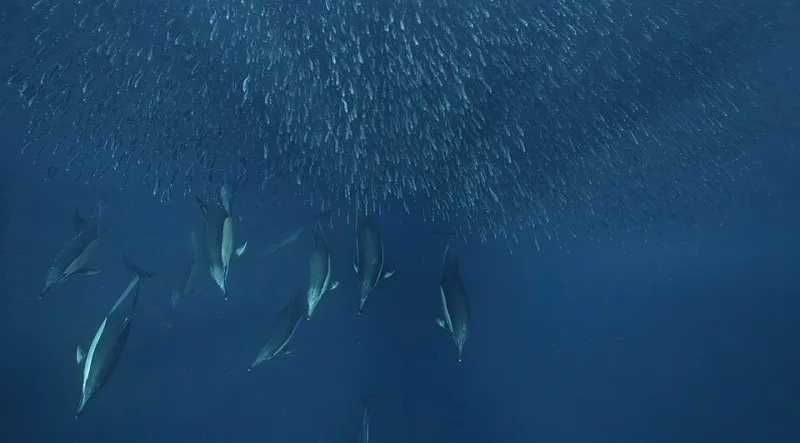
Synchronized swimming near divers — where multiple dolphins mirror each other's movements close to your position — often indicates a relaxed, socially cohesive pod that has accepted your presence. These are the moments people write home about, and they tend to happen when divers are moving slowly, breathing steadily, and not reaching out to touch.
That last point matters more than most people realize. Dolphins that choose to approach divers on their own terms are engaging in what researchers call voluntary interaction. The second a human reaches toward them, the dynamic shifts — and dolphins, who can read the intention behind a sudden movement, will typically respond by pulling back or departing entirely.
The Awareness Lesson Hidden in Every Encounter
Here's the practical takeaway that doesn't get talked about enough: if you want to dive well with dolphins — or honestly, just dive better in general — you have to become more aware of what your own body is doing in the water.
Dolphins are masters of what divers call situational awareness. They are monitoring current, temperature gradients, the positions of every pod member, the movements of prey, and yes, the strange bubble-blowing mammals in the wetsuits — all simultaneously. They respond to the environment as it actually is, not as they assumed it would be.
Most recreational divers, especially newer ones, are doing the opposite. They're focused inward — monitoring their air, managing their buoyancy, thinking about the camera — while the ocean moves around them without being fully registered.
Spending time observing dolphin behavior underwater is essentially a masterclass in environmental reading. Watch how they adjust their speed as they move through a current. Notice how they orient their bodies relative to surge. Pay attention to the way a pod will collectively shift direction before anything obvious has changed — they're detecting something you haven't noticed yet.
That kind of full-environment awareness is exactly what separates a competent diver from a genuinely skilled one.
How to Have Better Encounters (Without Chasing Them)
If you're diving in areas where wild dolphins are commonly spotted — places like the Florida Keys, the waters off Kona on the Big Island, or the Gulf of Mexico — a few simple adjustments to your behavior can dramatically improve your chances of a meaningful encounter.
- Slow your breathing. Slower, deeper breaths reduce the acoustic noise your regulator produces and signal calm. Dolphins appear to be more comfortable around divers with controlled, rhythmic breathing patterns.
- Reduce sudden movements. Erratic kicks and quick turns read as stressed or predatory behavior to most marine animals. Glide when you can.
- Stay horizontal and neutrally buoyant. Vertical divers flailing at mid-water are harder for dolphins to read acoustically and tend to trigger avoidance responses.
- Let them close the distance. Position yourself and wait. A dolphin that swims toward you is a fundamentally different experience than one you've chased — and it's one that tends to last much longer.
- Resist the urge to vocalize. Humming or making sounds underwater might seem like a fun way to connect, but it introduces noise into a communication system that is far more sophisticated than anything you're contributing to.
The Delfin Perspective
At Delfin Diving, the dolphin isn't just a mascot — it's a philosophy. These animals have been perfecting their relationship with the ocean for tens of millions of years. They don't fight the water; they read it, respond to it, and move through it with an economy of effort that every diver aspires to.
The next time you find yourself in the water with a wild dolphin, resist the urge to grab your camera first. Take a breath. Stay still. Let it scan you.
What you learn from that moment of being truly seen underwater might be the most useful thing you take back to the surface.