Smarter Than You Think: What Every Diver Should Know About Dolphin Cognition Before Getting in the Water
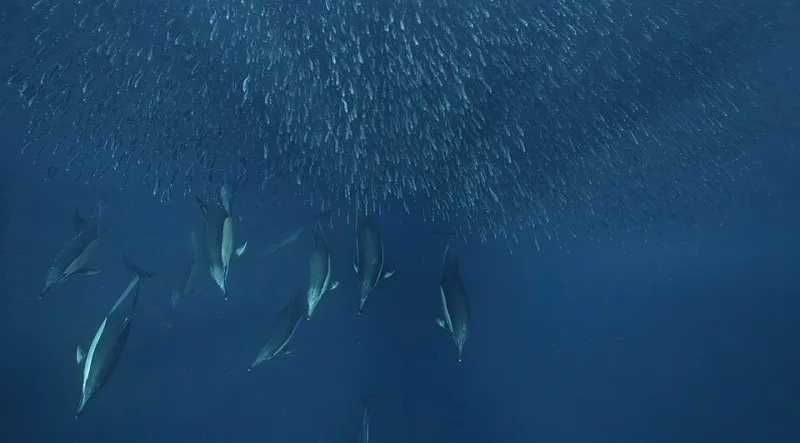
Photo: Stanislav Stelmakhovich, CC0, via Wikimedia Commons
There's a moment every diver fantasizes about — that weightless, slow-motion instant when a wild dolphin glides into view, locks eyes with you, and lingers just long enough to make you feel chosen. It's the kind of experience that gets people into diving in the first place. But here's the thing: dolphins are a lot more aware of what's happening in that interaction than most of us realize. And understanding what's going on inside their heads can make the difference between a meaningful encounter and a harmful one.
At Delfin Diving, we've built our whole identity around exploring the ocean with respect. That starts with knowing your neighbors — including the ones who breathe air, communicate in clicks, and might actually be judging you.
Dolphins Are Genuinely, Measurably Intelligent
This isn't feel-good mythology. Over the past two decades, marine biologists and cognitive scientists have amassed serious evidence that cetaceans — the group that includes dolphins and whales — possess some of the most sophisticated minds in the animal kingdom.
Bottlenose dolphins, the species most commonly encountered by divers in US waters, have demonstrated self-recognition in mirrors, a benchmark once considered exclusive to humans and great apes. They use tools — some populations in Shark Bay, Australia carry sponges on their rostrums to stir up the seafloor while foraging. They have names for each other. Researchers at the University of St Andrews confirmed that individual dolphins use unique signature whistles that function like personal identifiers, and that other dolphins in a group remember and respond to those calls even after years of separation.
Perhaps most relevant for divers: dolphins are acutely aware of social dynamics. They form alliances, hold grudges, and respond to perceived threats with coordinated group behavior. They are not passive props in your underwater photo op.
The Myth of the Friendly Dolphin
Here's where things get complicated. Dolphins often do approach humans voluntarily — and that can feel like an endorsement. In reality, their motivations are varied and not always benign from a conservation standpoint.
Some approaches are genuinely curious. Young dolphins especially will investigate unfamiliar objects, including divers. But repeated human contact can condition dolphins to associate people with food or entertainment, disrupting their natural foraging patterns and social structures. Animals that lose their wariness of humans become more vulnerable to boat strikes, entanglement, and harassment from less conscientious visitors.
There's also a safety angle that doesn't get enough attention. Male dolphins in particular can be unpredictable and physically powerful — an adult bottlenose can weigh 400–600 pounds. Recorded incidents of dolphins injuring humans, though rare, almost always involve animals that had been extensively habituated to human contact. Respecting their space isn't just good ethics. It's smart diving.
What the Research Says About Responsible Interaction
NOAA's Marine Mammal Protection Act makes it illegal to feed, pursue, or harass wild dolphins in US waters — and "harass" is defined broadly enough to include swimming aggressively toward them or blocking their path. But beyond the legal baseline, researchers offer clearer guidance on what low-impact interaction actually looks like.
The gold standard, according to wildlife biologists, is passive observation. Let them come to you. Descend slowly, minimize bubbles where possible, avoid sudden movements, and never attempt to touch or chase. If a dolphin wants to interact, it will. If it doesn't, it'll tell you by increasing speed or changing direction — and that's your cue to give it room.
Group size matters too. Larger dive groups create more acoustic and physical disruption. Some research suggests that pods with calves are particularly sensitive to human proximity, as mothers will sometimes abandon nursing or care behaviors when they feel their young are being crowded.
Why This Matters More Than You Might Expect
Dolphin populations in popular US dive destinations — the Florida Keys, Hawaii, the Gulf Coast — face compounding pressures from climate change, habitat degradation, and tourism. When diving operators crowd sites or allow guests to chase wildlife, the cumulative effect on local populations can be significant.
At Delfin Diving, we take this seriously because we're in it for the long game. The reefs and marine ecosystems we explore today need to exist for the next generation of divers. That means we brief every guest on wildlife interaction protocols before entry, and our guides are trained to redirect encounters that start to feel extractive rather than observational.
The dolphins you'll encounter on a well-guided dive are genuinely wild animals living fully realized lives — not attractions. The more you understand about their intelligence and social complexity, the more profound the experience becomes. You're not just watching something pretty. You're witnessing a mind at work in its natural environment.
How to Prepare for an Ethical Dolphin Encounter
If dolphin encounters are on your bucket list, a little preparation goes a long way:
- Choose operators carefully. Look for companies that follow NOAA guidelines and brief guests on marine mammal interaction before every dive. Ask directly how they handle encounters.
- Get comfortable in the water first. Panicked or clumsy swimmers create more disturbance. If you're newer to diving, prioritize buoyancy control before seeking out wildlife-heavy sites.
- Leave the GoPro on passive mode. Chasing a shot is one of the most common ways divers inadvertently stress marine animals. Set up your camera and let the action come to you.
- Read the body language. Tail slaps, open-mouth displays, and rapid direction changes are communication. Learn the basics before you get in.
- Report unusual behavior. If you encounter a dolphin that seems disoriented, entangled, or injured, note the location and contact NOAA's marine mammal stranding hotline.
The ocean doesn't owe us wonder — but when we show up with knowledge and humility, it tends to deliver anyway. That's the whole philosophy behind what we do at Delfin Diving. Dive deeper, not just in distance, but in understanding.