The Ten-Pound Habit: Why American Divers Dive Heavy, and the Shore Drill That Fixes It
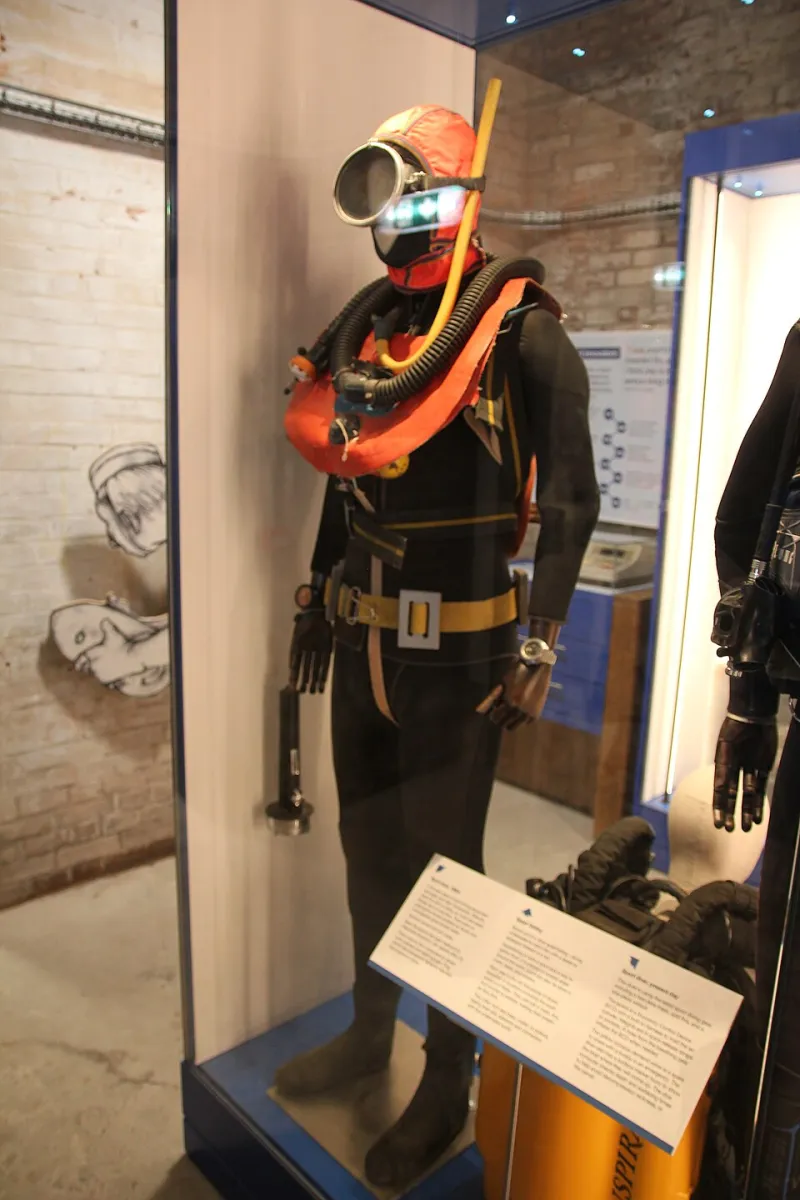
Photo: Tim Sheerman-Chase, CC BY 4.0, via Wikimedia Commons
There's a scene that plays out on almost every charter boat in the country. A diver in a stiff new 7mm suit stands at the transom with twenty-four pounds of lead on the belt, dumps air from the BC before the descent even starts, then spends the next forty minutes dumping again. And again. And again.
That diver isn't careless. They're carrying the number a rental counter gave them in 2019, or the number their instructor used when they were twenty pounds lighter and diving a steel tank, or the number a buddy swore by. Those numbers travel. They get written in logbooks and repeated forever.
Here's the thing: for most recreational divers in the U.S., the right amount of lead is less than what's on the belt right now. Sometimes a lot less.
What Extra Lead Actually Costs You
Overweighting rarely looks like a dramatic failure. It looks like a bunch of small tax payments.
You burn gas inflating and deflating all dive. You can't hold a horizontal position, so you dive feet-down, which means every kick pushes you toward the surface instead of through the water. You silt out the bottom on reef dives and quarry dives alike. You fight to stay off the sand at fifteen feet on your safety stop, which is the least relaxing three minutes of the day when it should be the most. And on the surface, you're the diver the divemaster quietly watches during the swim back to the ladder.
None of that is a skill problem. It's a number problem.
The Math Nobody Explains Up Front
Weighting isn't a fixed quantity. It's a moving target, and four variables move it constantly.
Salt versus fresh. Seawater is roughly 2.4 percent denser than fresh water. Practically, that means most divers need four to six more pounds in the ocean than they do in a Florida spring, a Midwest quarry, or a Great Lakes wreck. Divers who spend all summer in freshwater and then fly to the Keys almost always start their first ocean dive underweighted — which feels like euphoria until they can't hold a safety stop.
Wetsuit age and thickness. A brand new 7mm suit is a buoyancy machine. The same suit after a hundred dives has compressed, lost lift, and needs two or three pounds less lead. If you bought a new suit and kept your old number, you're now carrying extra.
Tank material. An aluminum 80 gets positively buoyant as it empties — noticeably so below 1,000 psi. A steel 100 or 119 stays negative throughout. Same diver, same suit, same ocean, different tank: your weight can shift by four pounds or more. This is why the number your buddy uses with their steel tank is useless to you.
You. Body composition, body weight, cold-water vasoconstriction, how much you've hydrated. None of it is constant.
The Surface Weight Check, Done Properly
This is the single most useful five minutes in diving, and almost nobody does it correctly.
Do it at the end of a dive, not the beginning. Tank at 500 psi or less, because that's the buoyancy state you'll be fighting at your safety stop. Here's the sequence:
- Get to the surface with your BC completely empty — not mostly empty. Dump everything.
- Put your regulator in, breathe normally, and get vertical and still. No sculling, no kicking.
- Take a normal breath and hold it — not a full inhale, a normal one.
- You want the waterline at eye level. You should be able to see over the surface with your eyes just at it.
If you're bobbing with your whole head dry and your shoulders out, take off two pounds. If you have to hold a big lungful or flutter your hands to stay up, add two pounds. Repeat. Adjust in two-pound increments until the waterline sits where it should.
One honest caveat: a tank with 500 psi in it is not a tank with 0 psi in it. If you run your gas down to nearly nothing on a shallow final dive, you'll find you need a touch more lead than the 500-psi check suggested. It's fine. The surface check is a tool, not a religion.
Keep a Weight Log
Most logbooks have a spot for weight, and most divers fill it in once and never look at it again. Treat it like data instead. Every entry: pounds, suit thickness, tank type, salt or fresh, and — this is the important one — whether the surface check passed. After ten entries you'll see the pattern, and you'll never guess again.
The Drill That Recalibrates Your Whole Body
Numbers on a belt only get you so far. Buoyancy is a feel, and the feel needs practice in shallow water where nothing bad happens.
Find a pool, a spring with a platform, or a shallow quarry shelf. Drop to ten or fifteen feet with an empty BC and a weight belt sized to your surface check. Then do this:
- Hover still. Cross your legs, arms out, hover three feet off the bottom for a full minute using nothing but your lungs. Inhale to rise, exhale to sink. Small breaths. This teaches you how little air it takes.
- Fin pivot. Lie flat on the bottom, then inhale until you pivot up onto your fin tips, then exhale back down. Repeat ten times.
- Dump-and-hover. At depth, dump all BC air and try to hold your position for thirty seconds. If you can't, the problem isn't your lungs — it's your lead.
Ninety minutes of this in twelve feet of water will do more for your air consumption and reef etiquette than a week of deep dives.
Trim: The Other Half of the Equation
Weight placement matters nearly as much as weight amount. Lead bunched on the front of a belt pulls you vertical. Move some of it to cam-band trim pockets so it sits over your lungs, and most divers instantly flatten out in the water. A steel backplate, a canister light on a hip belt, or a couple of pounds on the upper tank band can all shift your center of gravity without changing your total weight by an ounce.
Skip ankle weights unless a drysuit is genuinely forcing your feet up. Most divers who think they need them just need better trim.
When to Start Over
Recheck your weighting any time you change suits, tanks, water type, or your own body — and every time you travel somewhere new. The number that works in a 3mm shorty off Miami is not the number that works in a 7mm off Monterey.
Carry less lead. Hover more. The reef, your gas supply, and your dive buddy will all notice.