The Plus-One Pipeline: Five Easy Dives That Turn 'I'm Not Getting in That Water' Into 'When's the Next Trip?'
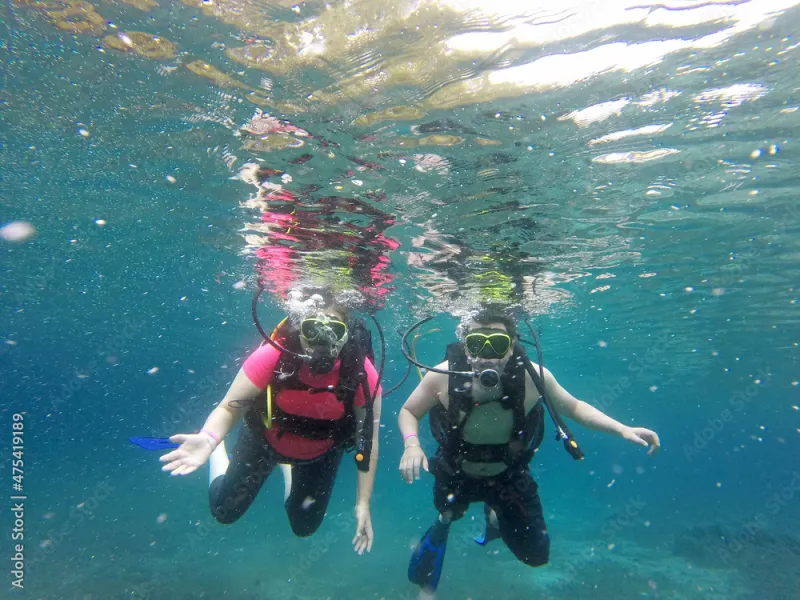
Photo: beginner couple first scuba dive shallow tropical reef clear water instructor, via as2.ftcdn.net
If you dive and your partner doesn't, you've had The Conversation. It starts with you casually mentioning a dive trip, escalates through 'I don't like fish' and 'what if my mask fills with water,' and ends with a compromise vacation where you snorkel glumly on the surface while your better half reads a novel.
Here's the thing: most first-dive failures aren't about courage. They're about bad conditions. Cold water, poor visibility, deep sites, and crowded cattle-boat operations will scare off anyone. Pick the right first dive, though, and the conversion rate is remarkable. These five are the ones that work.
1. The Florida Keys: shallow reefs with a theme-park fish population
Key Largo's shallow patch reefs sit in 15 to 25 feet of bathwater-warm, gin-clear water, teeming with fish that have zero fear of humans and every intention of inspecting your mask. Blue chromis, parrotfish, the occasional nurse shark snoozing under a ledge. The logistics are painless: a two-hour drive from Miami, operators who run discover-scuba sessions daily, and water warm enough that a wetsuit is optional even in winter. Your skeptic's first breath underwater will happen next to a barracuda that looks bored. That's the vibe you want.
2. Bonaire: a shore dive so easy it feels like cheating
Technically a Caribbean flight, but worth the passport stamp. Bonaire's famous entry-level shore dive, something like the 18th Street site, involves walking into waist-deep water, floating out ten feet, and finding yourself on a coral slope. No boat, no current, no schedule — if your partner panics, you stand up. That control is everything for nervous first-timers. The island's whole economy runs on diving, so instructors have seen every flavor of hesitation and are genuinely unbothered by it.
3. The springs of North Florida: no ocean required
If the ocean itself is the fear, skip it. Florida's freshwater springs — Ginnie, Devil's Den, Blue Grotto — offer 72-degree water, visibility measured in the hundreds of feet, and depths you can manage in a single breath of confidence. No waves, no salt sting, no surge. Devil's Den adds a prehistoric cavern setting that feels like an adventure movie. Plenty of divers got their start here without ever seeing a jellyfish, and it's a cheap weekend from most of the Southeast.
4. Catalina Island, California: the kelp forest flex
For the West Coast couple, the dive park at Casino Point on Catalina is the gold standard. It's a protected marine reserve with steps into the water, no surf, and a kelp forest that delivers the single best 'wow' per foot of depth in America. Yes, it's a wetsuit dive — but a good 7mm suit plus a professional guide makes it comfortable, and garibaldi fish the color of traffic cones will follow you around like curious dogs. If your skeptic needs to be impressed rather than merely comforted, this is the one.
5. Cozumel's beginner-friendlier cousin: a pool-to-ocean discover dive in the Caribbean
Okay, Cozumel itself is a drift-diving destination — not first-timer territory. But the discover-scuba programs along the Riviera Maya, in shallow protected areas near Playa del Carmen, offer warm water, sandy bottoms, and a gentle intro with a full Caribbean payoff. Combine it with a beach week and the dive becomes one item on a vacation your partner already wanted, which is a classic negotiation win.
How to Actually Run the Conversion
A few ground rules from couples who've been through it:
- Let a stranger teach them. You are the worst possible instructor for your spouse. Hire the professional.
- Do the pool session first. Every discover-scuba program includes one. Never skip it.
- Don't oversell it. 'You'll love it' creates pressure. 'It's a fun thing, no big deal if you hate it' creates space.
- Book the second dive before the first. Momentum matters.
And when they surface grinning and asking how much certification costs — because they will — act like you expected it all along. Then hand them the tide chart. They've got planning to do.