What Your Divemaster Is Really Thinking While You Fumble With Your BCD
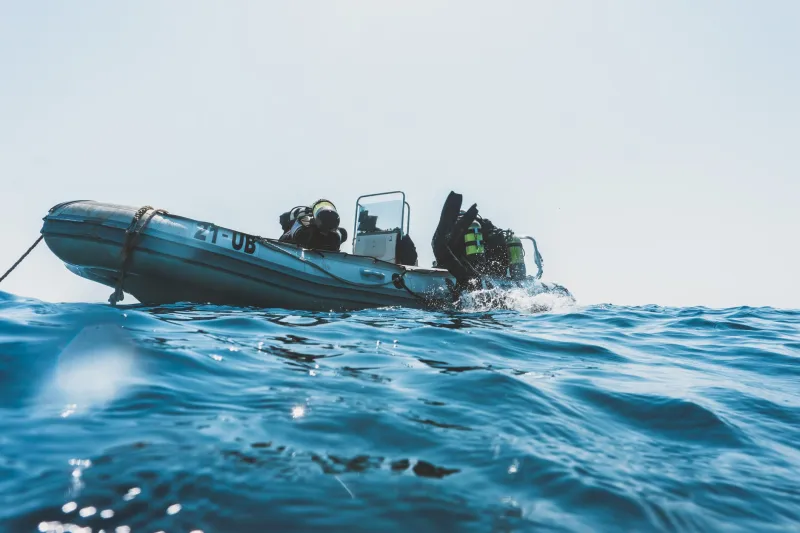
There's a moment on every charter boat — usually right around the time you're wrestling your wetsuit on in 90-degree heat — when the divemaster finishes the briefing, smiles, and says "any questions?" Most guests assume that smile means she's friendly. It doesn't. It means she's already finished assessing you.
I spent a recent Saturday shadowing Marisol, a divemaster who's been running trips out of Islamorada for six years, to find out what actually happens on her side of the mask. What I learned: the dive briefing is a performance, but it's also an exam. And you're taking it whether you know it or not.
The Briefing Is a Test You Didn't Study For
"People think I'm reciting rules," Marisol told me as we idled out toward the reef. "I'm really just watching who nods and who's scrolling their phone. The phone people are the ones I assign to the strongest buddy pairs."
She says every briefing follows the same script — depth, bottom time, entry, exit, lost-diver procedure — but the real information is delivered in the questions guests don't ask. The diver who asks about the current? Fine. The diver who asks where the bathroom is? Also fine. The diver who asks nothing and then can't find their weight belt? That's the one she watches all day.
Gear Checks Are a Love Language
Here's something nobody tells new divers: your divemaster genuinely enjoys checking your gear. It's not a chore. It's the five minutes where she gets to prevent 90% of the problems she'd otherwise deal with at 40 feet.
"The fanny pack?" she laughed, catching me staring at the battered waist pouch she wears over her BCD. "Cliff pack. Snorkel keeper, spare mask strap, slate, reef hook, snacks for seasick guests. Every working DM has one. We're basically diving Boy Scouts."
Her advice for making gear check painless: show up with your kit assembled and your tank already on. Divers who can't remember whether their inflator hose is connected are, in her words, "a flag, not a tragedy — but a flag."
The Behaviors That Make Her Day
Marisol's list of great-guest behaviors is refreshingly simple:
- Listen to the whole briefing. All of it. Even the part about the ladder.
- Be ready before the boat stops. Not kitted up and hovering — just ready.
- Say something if you're nervous. "A diver who tells me they're anxious is my easiest diver," she says. "A diver who hides it is my hardest."
- Return the weights. Every divemaster has a story about a weight pocket found on the swim platform. Every one.
And the behavior she'd banish to the bottom of the ocean? Divers who touch things. "The reef doesn't need your hands. The coral doesn't need to be stood on for a photo. I will spend an entire dive recovering from that one choice."
The Safety Stop Nobody Talks About
The three-minute safety stop is famously a diver's meditation time. For the divemaster, it's something else entirely: a headcount, a gas check, and a silent review of everything that went right or wrong.
"You'd be amazed what I can tell from a safety stop," she said. "Who's hovering. Who's still finning like they're late for a flight. Who's going to ask me at the dock whether they should do their Advanced course." She grinned. "The hoverers always ask. The finners never do — and they're the ones who need it."
So What Makes a Great Dive Guest?
Not experience, actually. Marisol has guided divers with 2,000 logged dives who couldn't follow a simple drift plan, and brand-new open water students who were an absolute joy. The difference, she says, is attitude: curiosity over confidence, questions over bravado, and a willingness to be told what to do by someone wearing a fanny pack.
"The ocean is humbling," she told me as we tied back up at the dock. "The divers who get that are the ones I'd take anywhere. The ones who don't? They usually figure it out by dive three."
So next time you're on a charter and your divemaster finishes the briefing with that knowing smile — know that the assessment already happened. Pass it anyway. It takes about five minutes, and it earns you a better dive.