Same Depth, Different Trip: Why Narcosis Hits Some Divers Hard and Leaves Others Completely Fine
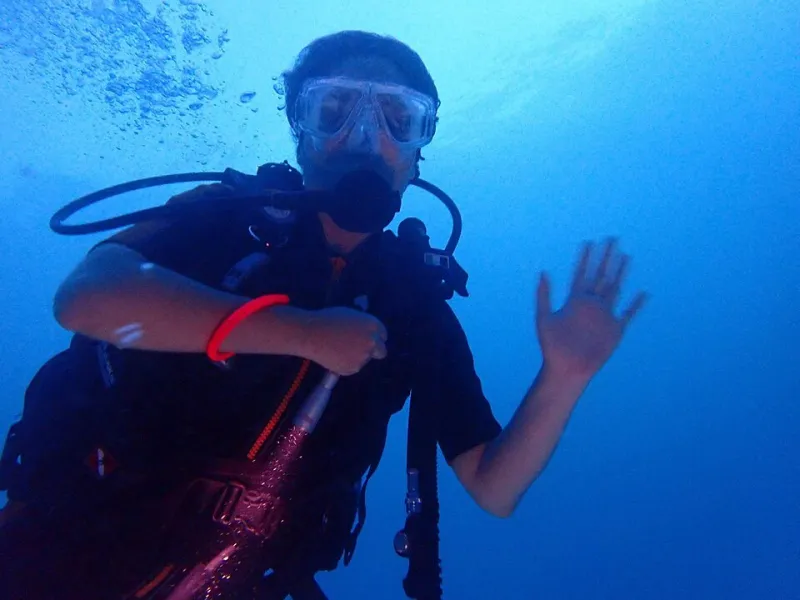
Photo: Tinaral, CC BY-SA 4.0, via Wikimedia Commons
Here's a scenario that plays out on dive boats all the time: two divers with similar experience levels and similar build descend together to 90 feet. One surfaces cracking jokes about feeling like they'd had two margaritas at depth. The other says, honestly, they didn't notice anything unusual at all. Same water. Same pressure. Same nitrogen. Completely different experiences.
If you've ever wondered why nitrogen narcosis seems to pick favorites, you're not alone. Scientists have been trying to crack this for decades, and they still don't have a clean answer. But what we do know is genuinely useful—especially if you're planning deeper dives or want to understand your own risk profile before you go.
What's Actually Happening Down There
Nitrogen narcosis kicks in because of how nitrogen behaves under pressure. At depth, the partial pressure of nitrogen in your breathing gas rises significantly, and that gas begins to interfere with nerve signal transmission in your brain. The result is something that resembles alcohol intoxication—slowed thinking, impaired judgment, a kind of dreamy confidence that can feel great right up until it becomes dangerous.
The effect typically starts somewhere around 60 to 100 feet and becomes more pronounced the deeper you go. At 130 feet—the recreational limit—many divers feel noticeably altered. Below that, things can get genuinely hazardous without proper training and gas management.
But here's the twist: the correlation between depth and impairment is not as predictable as a simple formula. Two divers at identical depths can have wildly different cognitive experiences, and researchers haven't pinned down exactly why.
The Factors That Shape Your Personal Response
Anxiety and mental state are probably the biggest variables, and they're also the most underappreciated. Studies suggest that divers who are already anxious or stressed before a dive show more pronounced narcosis symptoms at shallower depths. The nervous system is already running hot, and nitrogen's sedating effect interacts differently with that baseline. If you're tense before you hit the water—because of rough conditions, unfamiliar gear, or just a bad morning—you may find narcosis creeping in earlier and harder.
Fatigue and sleep deprivation compound things significantly. A diver who slept poorly and skipped breakfast is working with a cognitive system that's already compromised. Add nitrogen at depth, and the margin for clear thinking shrinks fast.
Body composition plays a role too, though it's more nuanced than the old idea that heavier divers are more susceptible because nitrogen is fat-soluble. What matters more is the ratio of lean tissue to fat, overall fitness, and how efficiently your body manages gas absorption and off-gassing. That said, body composition alone doesn't explain the full variance between individuals.
Genetics may be the wildcard that researchers keep circling back to. Some people seem to have nervous systems that are simply less reactive to nitrogen's effects, possibly due to differences in receptor sensitivity at the cellular level. If your dive buddy consistently shrugs off narcosis while you feel it every time at 80 feet, that gap might have a genetic component that neither of you can control.
Acclimatization is real but limited. Divers who regularly go deep tend to report milder narcosis effects over time—not because they've built immunity, but likely because they've learned to recognize the symptoms earlier and compensate behaviorally. They know what their own version of narcosis feels like, so they manage it better. That's not the same as being unaffected.
The Confidence Trap
One of the stranger paradoxes in narcosis research is this: the divers who feel the least impaired are sometimes the most impaired. Nitrogen at depth can produce a sense of well-being and competence that's completely disconnected from actual performance. You feel sharp. You feel calm. You feel capable. And meanwhile, your reaction time has slowed, your problem-solving is compromised, and your risk assessment is off.
This is why self-reporting is such a lousy measure of narcosis. If you ask a narced diver how they're doing, they'll often tell you they're totally fine—and mean it. It's one of the reasons dive buddies and structured communication protocols matter so much on deeper dives. Someone else may notice your impairment before you do.
Practical Strategies for Managing Your Personal Risk
The good news is that even if you can't predict exactly how narcosis will hit you, you can take concrete steps to reduce both your vulnerability and the consequences.
Dive well-rested and well-fed. This sounds basic, but it's genuinely one of the most effective variables you can control. A properly fueled, well-slept diver is cognitively more resilient at depth.
Manage your pre-dive anxiety. Breathing exercises, a calm pre-dive routine, and honest conversations with your buddy about conditions can lower your baseline stress significantly. If something feels off before you enter the water, that's worth paying attention to.
Descend slowly and deliberately. Rushing your descent increases the rate of nitrogen absorption and gives your system less time to adapt. A controlled, gradual descent lets you check in with yourself at different depths and notice changes as they happen.
Establish personal benchmarks. Keep a dive log that includes notes about how you felt at various depths under different conditions. Over time, patterns will emerge. You'll start to know whether 80 feet on a cold morning after a stressful travel day is a different experience than 80 feet on a calm afternoon when you're relaxed and rested. That self-knowledge is genuinely protective.
Use a buddy system with agreed signals. Before any deeper dive, establish specific check-in signals with your buddy. A simple okay exchange isn't enough—agree on a cognitive task, like holding up fingers and having your buddy confirm the count. If the response is slow or confused, that's information.
Consider nitrox for shallower recreational dives. Enriched air nitrox reduces the percentage of nitrogen in your gas mix, which lowers the partial pressure of nitrogen at a given depth. For dives in the 60–100 foot range, this can meaningfully reduce narcosis risk. Talk to a certified instructor about whether nitrox is appropriate for your dive plan.
You're the Variable Worth Studying
The honest truth about nitrogen narcosis is that the most important research subject for your diving safety is you. The science can tell you what's happening in general, but it can't tell you exactly where your threshold sits, how your body behaves under stress, or what conditions make you most vulnerable.
That's not a reason to be anxious about deeper dives—it's a reason to approach them thoughtfully. Know your history. Dive with people you trust. Build depth experience incrementally rather than chasing numbers. And if you want to go deeper safely and seriously, advanced training like PADI's Deep Diver specialty or technical diving courses will give you the framework to manage narcosis as a known variable rather than an unpredictable wildcard.
The ocean rewards self-awareness. Knowing how your mind behaves under pressure—literally—is one of the most valuable things you can bring to any dive.